
Does lymphatic drainage work? What the research says, goal by goal
What there is evidence for, what has never been measured and which promises do not hold up, with the source for each. And how to check whether it works for you, without trusting a before-and-after.
9 min read Sources ↓
The answer, goal by goal
“Does it work?” has a different answer for each thing people want from it. This is what has been published, from the goal with the most evidence to the one with the least:
- Lymphedema, alongside compression and exercise
- Evidence
- It helps, but only a little. Added to bandaging, it reduced arm volume by another 7.11% on top of bandaging alone, which already reduced it by 30 to 39%.1 The International Society of Lymphology describes its added value on volume as limited.2
- Swelling after cosmetic surgery
- Weak evidence
- A 2026 review of seven studies concluded that it moderately reduces swelling, with inconsistent effects on pain and fibrosis, and called for better trials.3 Only with your surgeon’s go-ahead.
- Lipedema
- Weak evidence
- Conservative treatment, which includes drainage, brings little relief: in a 2026 trial, only 8% of the women who stayed on it reduced their leg pain by 2 points out of 10 in a year.4
- Fibromyalgia
- Not studied
- A systematic review says it may help, but that the evidence is still insufficient.5
- Heavy legs or a puffy face in healthy people
- Not studied
- It is what it is most used for, and nobody has measured it. There is no evidence of added benefits for a healthy person.6
- Recovery after training
- Not studied
- A small trial with 30 people after intense exercise found no difference from the group that did not receive it.7
- Bowel movements
- Weak evidence
- What has been studied is something else: abdominal massage for constipation, which added one and a half bowel movements a week in a meta-analysis of 23 studies.8 It is not lymphatic drainage.
- “Detox”, or flushing toxins
- No
- There is no solid evidence. In the UK, the advertising regulator requires proof before anyone advertises it.9
- Getting rid of cellulite
- No
- No treatment gets rid of it, and there is no evidence that massage improves how it looks in the long term.10, 11
A word on the table: “not measured” does not mean “does not work”. It means nobody has tested it, and that a specific promise, like “goodbye swelling in a week”, does not come from any study.
Why you feel something even if it is not measured
People who do it often feel lighter legs or a fresher face, and they are not imagining it. But several of those feelings have another explanation, and it is worth knowing them so you do not credit the massage with what your posture or the clock is doing:
- Lying down with your legs up already moves fluid. With your feet raised, fluid from your legs is absorbed into the blood and your kidneys remove it. That is why many people need to pee after lying down.12 If you do the drainage lying down, part of the effect is the posture.
- A puffy face settles on its own in the morning. Swelling after sleep usually goes down within a few hours.13 A photo at 8 and another at 11 show a change even if you do nothing.
- Moving and breathing push lymph along. Muscles push it when they contract: in one exercise study, lymph left the thigh three to six times faster than at rest.14 Routines combine breathing, movement and massage, so it is hard to tell which does what.
- Ten calm minutes. Gentle touch and slow breathing are relaxing, and you feel that in your body too.
The British Lymphology Society puts it this way: manual drainage and self-massage bring relief and feel good, even though their effectiveness remains unproven.15
What people say, and what the sources say
We asked search engines and AI assistants the same questions people ask. These are the ideas that come up most and do not hold up:
“It flushes toxins”
There is no evidence for it. A healthy lymphatic system does not need help to do its job.6 The UK advertising regulator reminds anyone claiming that drainage removes toxins that they must be able to prove it, and it has already ruled misleading an ad that promised it on the strength of one unpublished study and testimonials.9
“It helps you lose weight” or “reduces inches”
There is no evidence that it helps you lose weight.6 If the scale drops a little after lying down with your legs up, it is water you have peed out,12 not fat, and it comes back.
“It can spread cancer”
Some answers state it as fact, and it is not. No research has proved that massage spreads cancer.16 A study that followed 1,106 women treated for breast cancer found no more recurrences among the 110 who received drainage for lymphedema.17 The guidelines are more cautious: there is no evidence either way, it is never done directly over a tumor19 and, with active cancer, the decision is made with your oncology team.15 There is more in side effects and when not to do it.
“Do it three to five times a week” and “with oil”
Clinical self-massage leaflets ask you to do it every day, for 10 to 20 minutes, and it does not need oil or cream.15 We explain it in how often to do it, for how long and why without oil.
How to check whether it works for you
If you want to know whether it works for you, do not trust one photo before and one after. Run a simple test, with the same conditions each time. This is our suggestion, not a study:
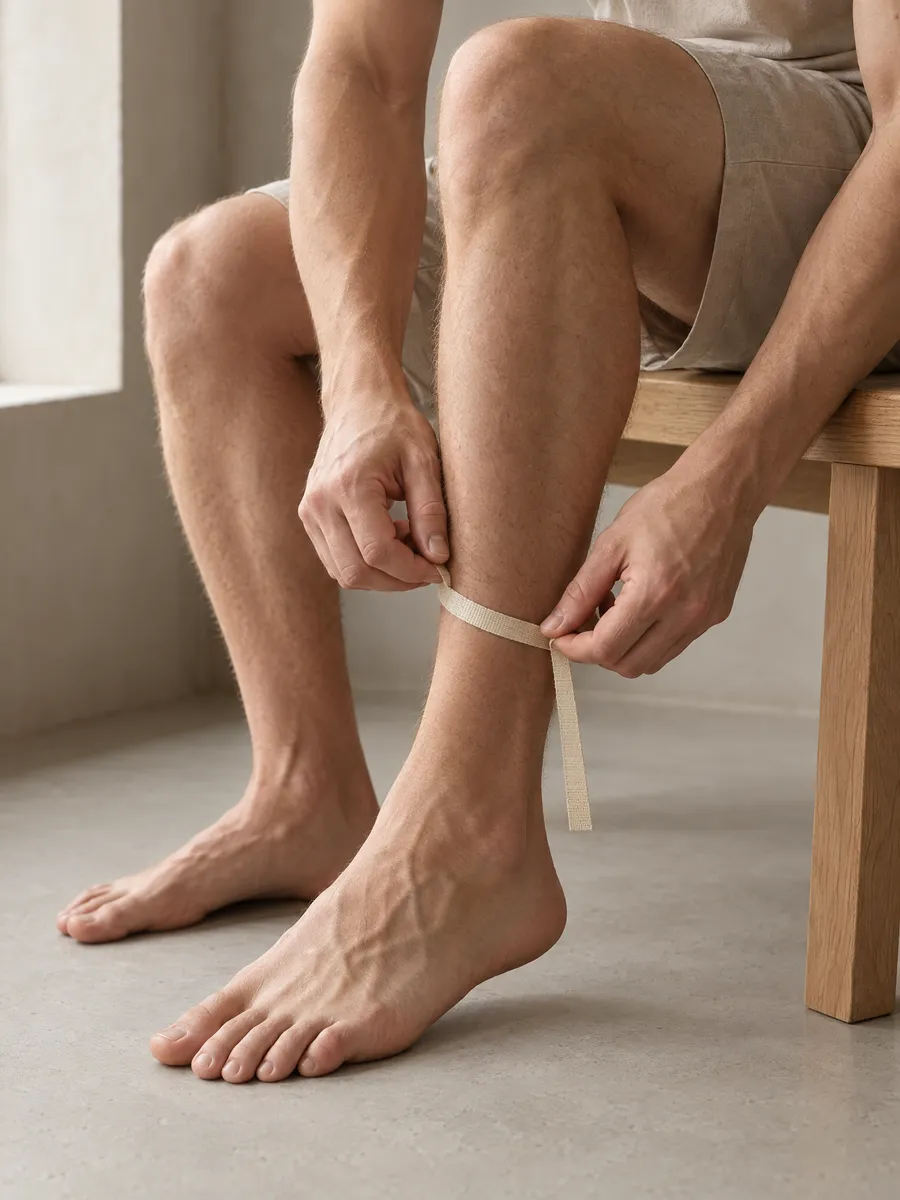
- Pick one thing to watch. Your ankle measured with a tape, always at the same spot (say, two fingers above the ankle bone), or how heavy your legs feel from 0 to 10 at the end of the day.
- Measure at the same time of day and note what changes it: hours on your feet, heat, a salty dinner, your period.
- Two weeks without the routine and two weeks with it. Compare the averages, not a single day.
- If it improves, keep going. If you notice nothing, that is an answer too: it is not for you, or your swelling has another cause.
Questions
Is lymphatic drainage just a placebo?
Not entirely. In lymphedema it has a small, measured effect.1 In healthy people, what you feel comes partly from posture, movement and calm, and nobody has measured how much the massage itself adds.6
Why do I pee more after lymphatic drainage?
Mostly because of the posture: with your legs up, fluid in the tissues goes back into the blood and your kidneys remove it.12 It is not toxins leaving, it is water.
Does lymphatic drainage make you poop?
There are no studies of drainage for that. Abdominal massage, which is a different technique, has shown one and a half extra bowel movements a week in people with constipation, although it did not reduce laxative use.8
How many sessions until I notice something?
In a healthy person, the lighter feeling comes straight away and does not last long, so it does not build up over sessions. In lymphedema, if several sessions bring no improvement, talk to your specialist.19
Does it help after liposuction or a tummy tuck?
Studies point to less swelling, especially when started between day 2 and day 5 and given in 6 to 12 sessions by a professional.3 It is not something to do on your own: after surgery, lymph can change its route, and your team knows which way to move it.
Does it help with cellulite?
No. No treatment gets rid of it,10 and a review of 67 studies found no clear evidence that any of them work well.11
Sources
- 1.Ezzo J. et al. (2015). Manual lymphatic drainage for lymphedema following breast cancer treatment. Cochrane Database of Systematic Reviews.
- 2.International Society of Lymphology (2023). The diagnosis and treatment of peripheral lymphedema: 2023 consensus document. Lymphology.
- 3.Alsairefi S. et al. (2026). Efficacy of manual lymphatic drainage in reducing postoperative complications after cosmetic plastic surgery: a systematic review. Plastic and Reconstructive Surgery Global Open.
- 4.Podda M. et al. (2026). Liposuction versus conservative therapy for patients with lipoedema in Germany: a randomised controlled trial. The Lancet.
- 5.Algar-Ramírez M. et al. (2021). Efficacy of manual lymph drainage and myofascial therapy in patients with fibromyalgia: a systematic review. Schmerz.
- 6.UCLA Health (2026). Lymphatic drainage massage: separating fact from fiction.
- 7.Lee S. et al. (2026). Effects of manual lymphatic drainage on post-HIIT oxidative stress and lactate dynamics. Technology and Health Care.
- 8.Huang S. Y. et al. (2025). Effectiveness of abdominal massage on chronic constipation in adults: a systematic review and meta-analysis. International Journal of Nursing Studies.
- 9.Advertising Standards Authority (2022). Health: detoxing and lymphatic drainage.
- 10.Cleveland Clinic (2021). Cellulite.
- 11.Luebberding S. et al. (2015). Cellulite: an evidence-based review. American Journal of Clinical Dermatology.
- 12.West Suffolk NHS Foundation Trust (2026). Nocturia: getting up at night to pass urine.
- 13.Cleveland Clinic (2024). Facial swelling.
- 14.Havas E. et al. (1997). Lymph flow dynamics in exercising human skeletal muscle as detected by scintography. The Journal of Physiology.
- 15.British Lymphology Society (2022). Lymph Facts: self lymphatic drainage.
- 16.Cancer Research UK (2022). Massage.
- 17.Hsiao P. C. et al. (2015). Risk of breast cancer recurrence in patients receiving manual lymphatic drainage: a hospital-based cohort study. Therapeutics and Clinical Risk Management.
- 18.NHS (2026). Swollen ankles, feet and legs (oedema).
- 19.Cleveland Clinic (2024). Lymphatic drainage massage.